Introduction
As the world looks for ways to move away from fossil fuels, hydrogen is often hailed as the “fuel of the future.” While battery-powered electric cars are popular, hydrogen fuel cells offer a different way to power everything from buses to spacecraft. The most amazing part? The only exhaust they produce is pure water vapor.
What is a Fuel Cell?
A fuel cell is an engine that produces electricity through a chemical reaction rather than by burning fuel. Unlike a battery, which stores energy and eventually runs out, a fuel cell produces electricity as long as it has a constant supply of hydrogen.
How Does It Work?
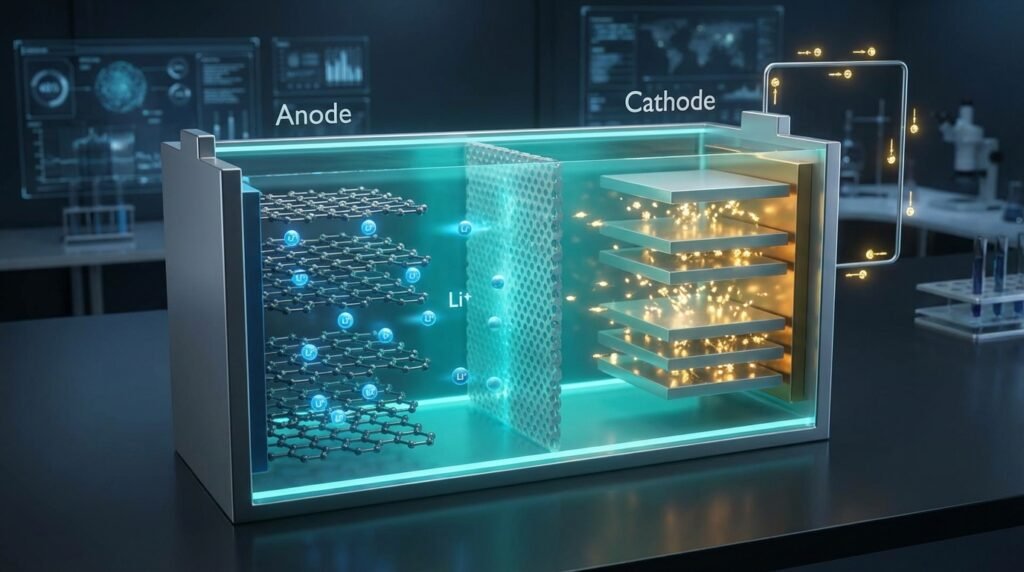
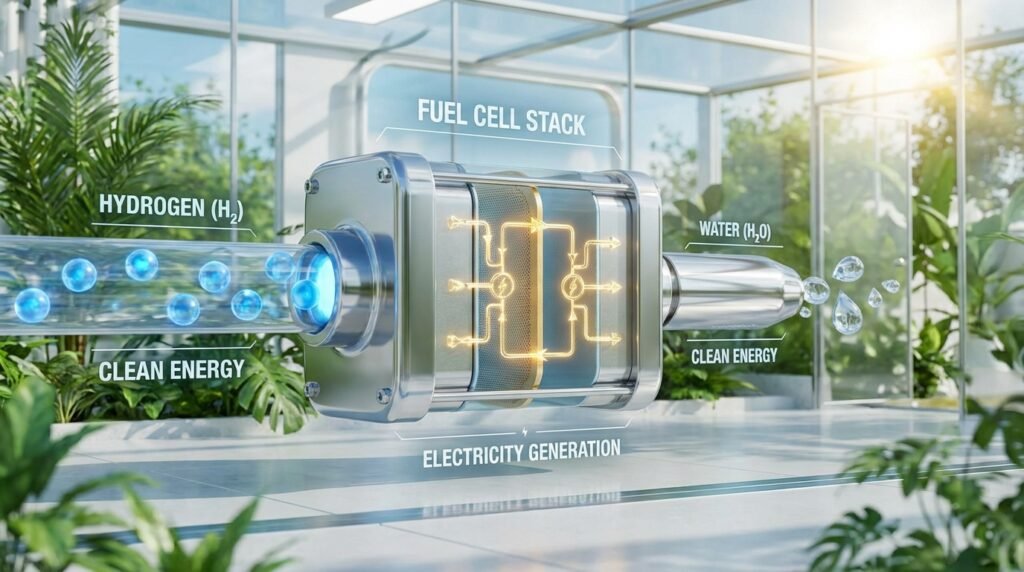
The process happens inside a sandwich-like structure with two plates (the anode and the cathode) separated by a special membrane.
- Hydrogen Input: Hydrogen gas enters the fuel cell at the anode.
- The Split: A catalyst (usually platinum) splits the hydrogen atoms into two parts: electrons and protons.
- The Current: The membrane only allows the protons to pass through. The electrons are forced to take a different path through an external circuit. This flow of electrons is the electricity that powers the motor.
- The Combination: On the other side (the cathode), the electrons and protons reunite and combine with oxygen from the air.
The Only Output: Water
Because the process only uses hydrogen and oxygen, the final chemical byproduct is H₂O. This means a hydrogen-powered vehicle literally emits nothing but water from its tailpipe, so clean you could theoretically drink it.
Why Use Hydrogen?
- Fast Refueling: Unlike electric cars that can take hours to charge, a hydrogen tank can be filled in about five minutes, much like a gas tank.
- Long Range: Hydrogen is very energy-dense, making it ideal for heavy-duty transport like long-haul trucks, ships, and even planes that would require batteries too heavy to be practical.
Conclusion
Hydrogen fuel cells represent a bridge to a zero-emission future. While the infrastructure for hydrogen is still being built, the technology offers a powerful, clean alternative for the heavy-duty transportation needs of tomorrow.