Introduction
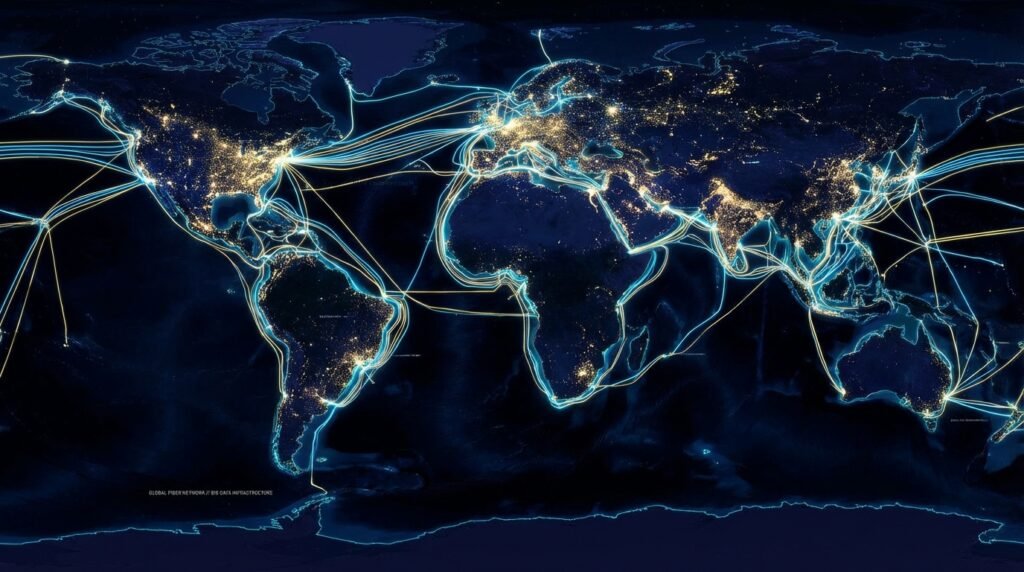
We often think of the internet as something invisible, a “cloud” or a signal in the air. In reality, the internet is a massive, physical network of cables, some of which are as thick as garden hoses and stretched across the bottom of the ocean. It is the largest machine ever built by humans, designed to transport data from one side of the planet to the other in milliseconds.
The Physical Infrastructure
Every time you send an email or watch a video, that data is broken down into tiny “packets.” These packets travel through several layers of hardware:
- Subsea Cables: Over 90% of international data travels through fiber-optic cables on the seafloor. These cables use pulses of light to transmit information at incredible speeds.
- Data Centers: These are the “brains” of the internet, giant warehouses filled with servers that store the websites and apps you use every day.
- Routers and Switches: These act like digital traffic cops, reading the “address” on your data packets and directing them toward the fastest path to their destination.
How Data Finds Its Way (IP Addresses)
Just like your home has a physical address so the postman can deliver mail, every device connected to the internet has a unique IP (Internet Protocol) Address. When you type “https://www.google.com/search?q=google.com,” your computer uses a DNS (Domain Name System), which acts like a phonebook, to look up the specific IP address associated with that name. Once it has the “number,” it knows exactly where to send your request.
The Last Mile
The final part of the journey is called the “last mile.” This is the connection from your local internet service provider (ISP) to your home. Whether it’s through fiber-optic lines, copper wires, or cellular towers (4G/5G), this is where the light pulses or electrical signals are converted back into the digital content you see on your screen.
Conclusion
The internet isn’t magic; it’s a feat of global engineering. It is a physical web of light and electricity that connects billions of people. Understanding that there is a real, physical world behind your screen helps you appreciate the complexity of every click and scroll.