Introduction
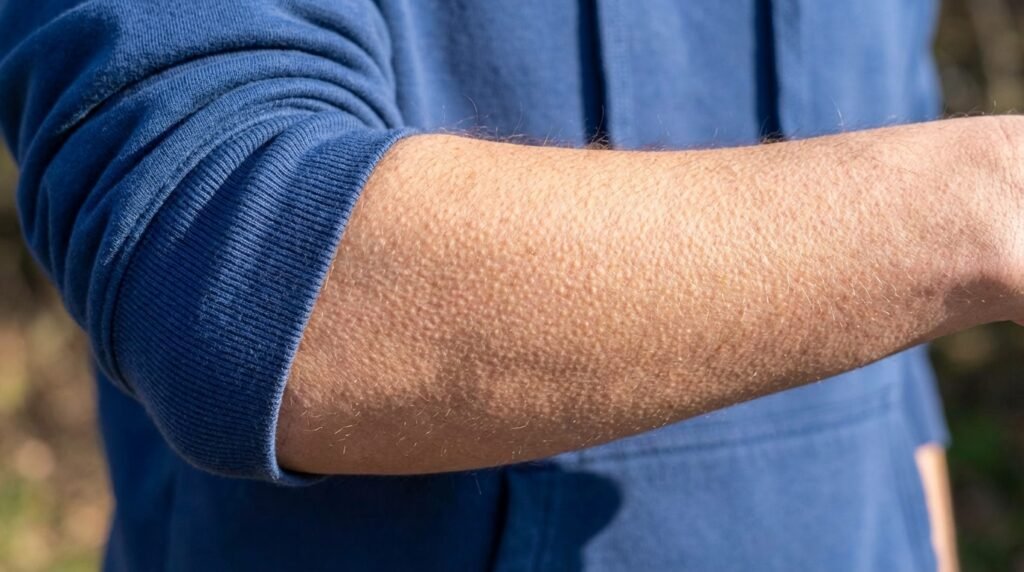
We’ve all experienced it: a sudden wave of chills, a shiver down the spine, and the appearance of tiny bumps on our skin, making our body hair stand on end. Whether it’s from a blast of cold air, a scary movie, or a particularly moving piece of music, this phenomenon, commonly known as “goosebumps,” is a familiar part of the human experience. But why does our body do this? It turns out, this seemingly useless reaction is a fascinating throwback to our ancient ancestors, a vestige of a time when body hair was a matter of survival. Let’s explore the science and history behind this everyday mystery.
What Are Goosebumps (a.k.a. Piloerection)?
The technical term for goosebumps is piloerection. The name comes from the Latin words “pilus,” meaning hair, and “erectio,” meaning to raise. It’s an involuntary reflex that causes the hairs on our skin to stand up straight, creating small bumps on the skin’s surface. This reflex is also what’s responsible for a cat’s fur bristling when it’s startled or a dog’s hackles rising when it feels threatened.
The Muscle Behind the Bumps
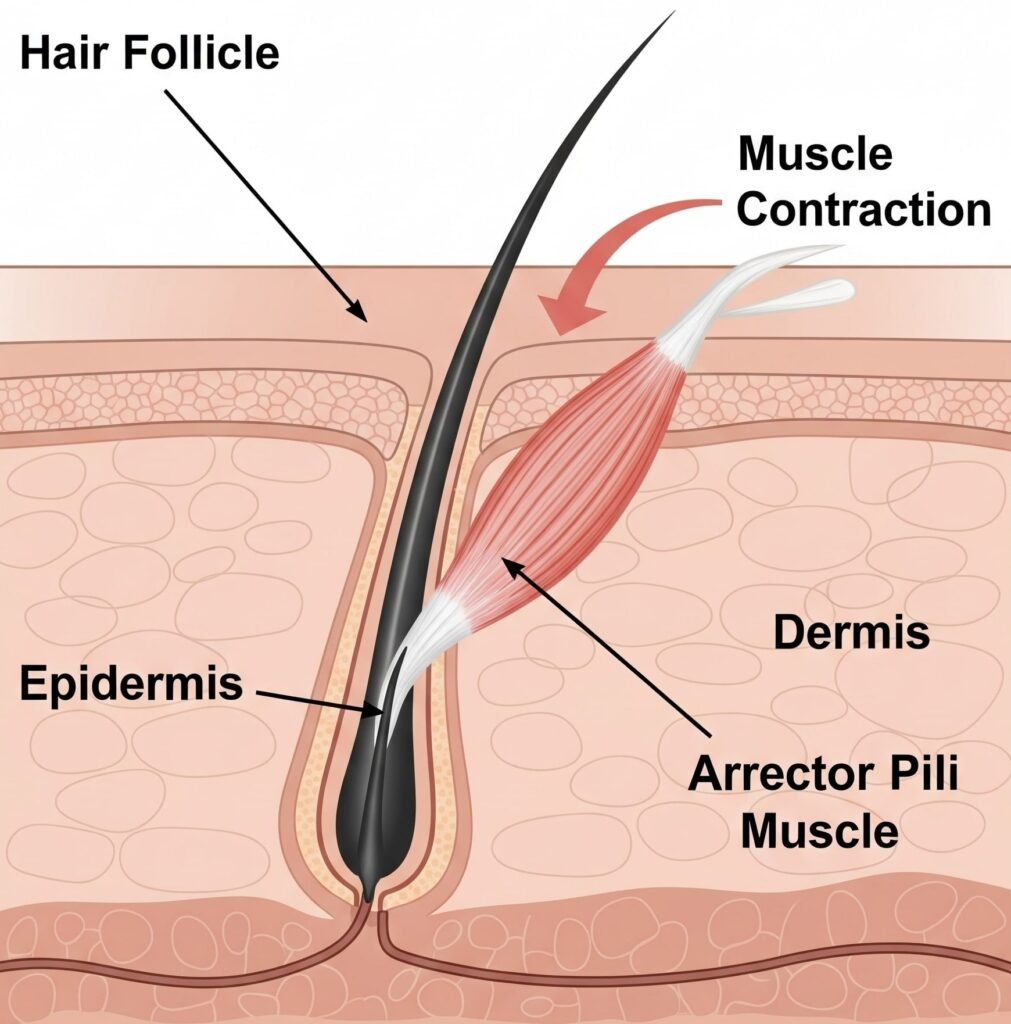
The goosebumps themselves are created by tiny, involuntary muscles attached to each hair follicle, known as arrector pili muscles. These smooth muscles are connected from the base of the hair follicle to the surrounding skin tissue. When they contract, they pull the hair follicle upright, causing the hair to stand up and creating a dimple on the skin’s surface.
The Purpose: Insulation and Defense
For our ancient, hairier ancestors, goosebumps had two practical purposes:
- Insulation: When a primitive human felt cold, the arrector pili muscles would contract, causing their body hair to stand up. This would trap a layer of air close to the skin, creating a barrier that helped to insulate the body and retain heat. While largely ineffective on modern, less-hairy humans, the reflex remains.
- Defense: When faced with a threat, our ancestors’ hair would stand on end, making them appear larger and more intimidating to predators or rivals. This same principle is why animals like porcupines and hedgehogs raise their quills.
Modern Triggers: Cold, Emotion, and Music
While we no longer rely on body hair for insulation or intimidation, the goosebumps reflex has remained hardwired in our nervous system. Today, they are triggered by a variety of stimuli that activate the same part of our nervous system responsible for the “fight or flight” response.
- Cold: This is the most common trigger, as the body’s ancient thermoregulation system kicks in.
- Fear or Surprise: The sudden release of adrenaline (a key hormone in the fight-or-flight response) causes the arrector pili muscles to contract.
- Awe or Emotion: A particularly moving piece of music, an inspiring speech, or a beautiful work of art can trigger a similar neurochemical response, resulting in goosebumps.
Why We Still Get Goosebumps Today
The reason this reflex persists, even without its original purpose, is that it’s a deeply ingrained physiological response. It’s a harmless, fascinating vestige of our past, a silent reminder of a time when our survival depended on hair standing on end.
Conclusion
Goosebumps are a perfect example of a physiological echo from our history. What was once a vital survival mechanism for insulation and intimidation has evolved into a quirky, involuntary reaction to cold, fear, and profound emotional moments. The next time you feel that familiar tingling sensation, you’ll know you’re experiencing a fascinating link to our past.