Introduction
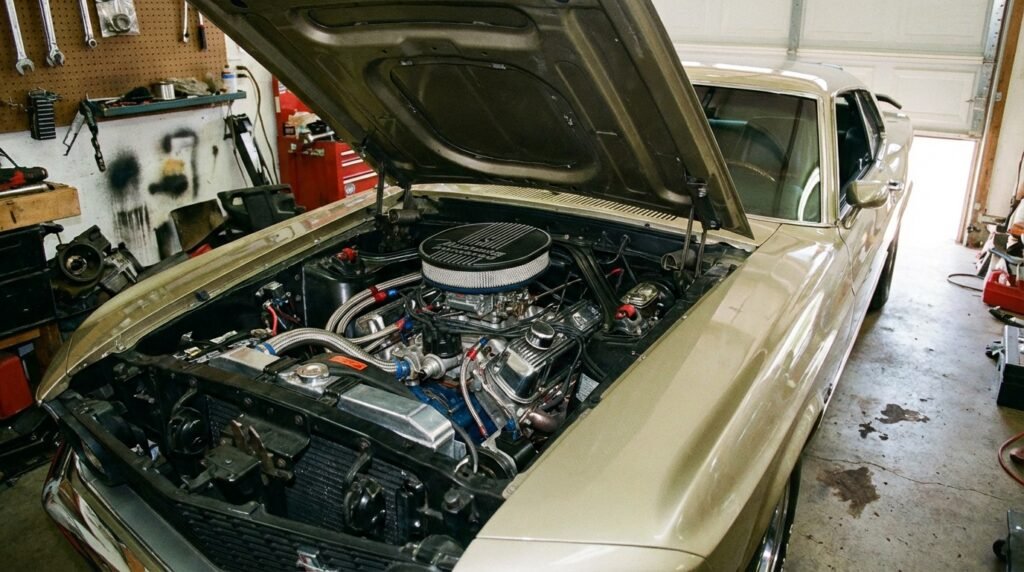
We rely on our cars every day to get us from one place to another, but for most of us, the engine remains a mysterious box of metal and noise. When we turn the key or push a button, a series of complex events happens almost instantly, converting a liquid fuel into the rotational motion that powers our wheels. At its core, the vast majority of car engines operate on a brilliant and simple principle known as the four-stroke combustion cycle. Let’s pull back the curtain and explore the fascinating process that brings a car to life.
The Core Principle: Converting Energy into Motion
A car engine is a heat engine. Its primary job is to take the chemical energy stored in fuel (like gasoline or diesel) and convert it into mechanical energy (motion). It does this through a controlled, rapid series of small explosions, which push parts of the engine and create rotation. This rotation is then transferred to the wheels via the transmission and drivetrain.
Key Components of a Car Engine
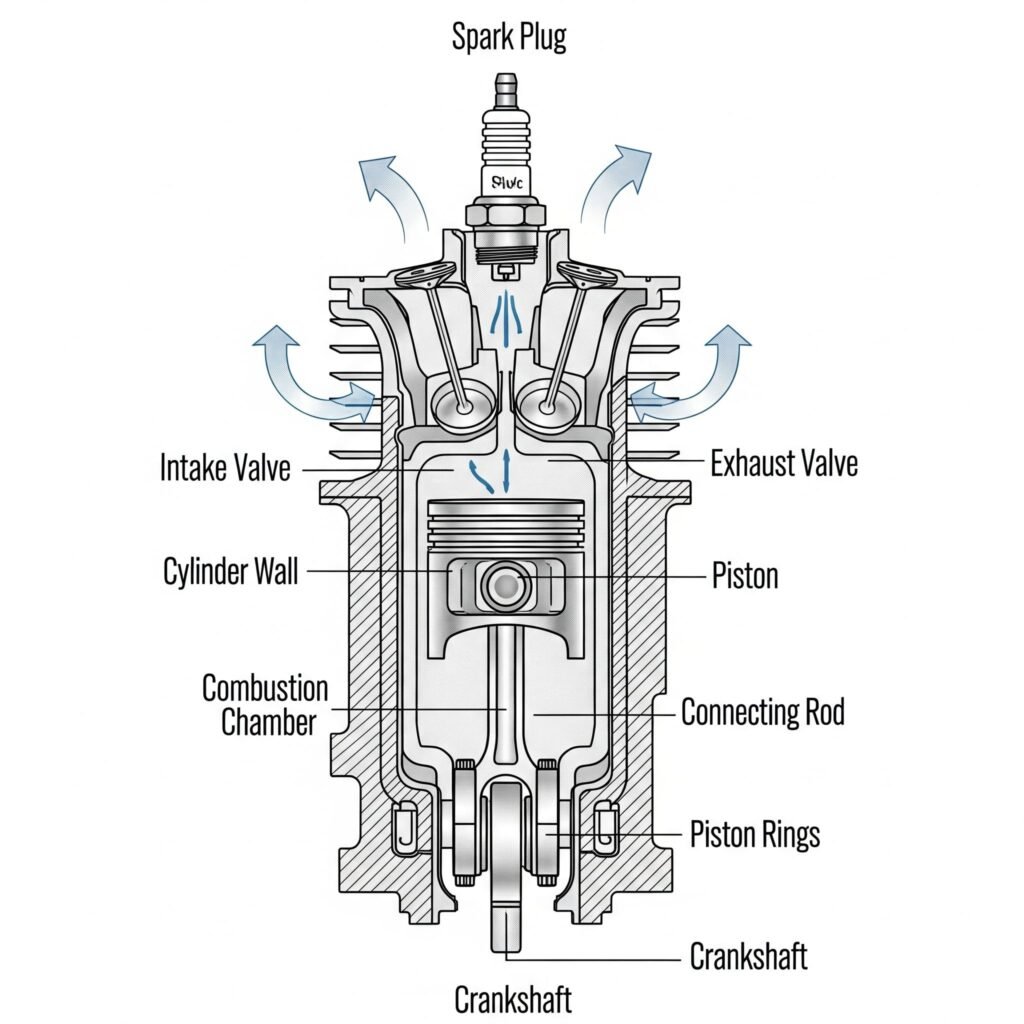
Before we dive into the cycle, let’s understand the main parts of a single cylinder, which is the heart of the engine’s operation:
- Cylinder: A hollow tube or chamber where the combustion process takes place. Most cars have multiple cylinders (e.g., four, six, or eight).
- Piston: A cylindrical component that fits snugly inside the cylinder. It moves up and down inside the cylinder in response to the combustion.
- Crankshaft: A large rod that converts the up-and-down (reciprocating) motion of the pistons into rotational motion.
- Spark Plug & Valves: The spark plug ignites the fuel-air mixture. The valves open and close to let in fresh air and fuel and to let out exhaust gases.
The Four-Stroke Cycle Explained
Each piston in the engine goes through this cycle repeatedly, thousands of times per minute. The four strokes are named for the piston’s up or down movement.
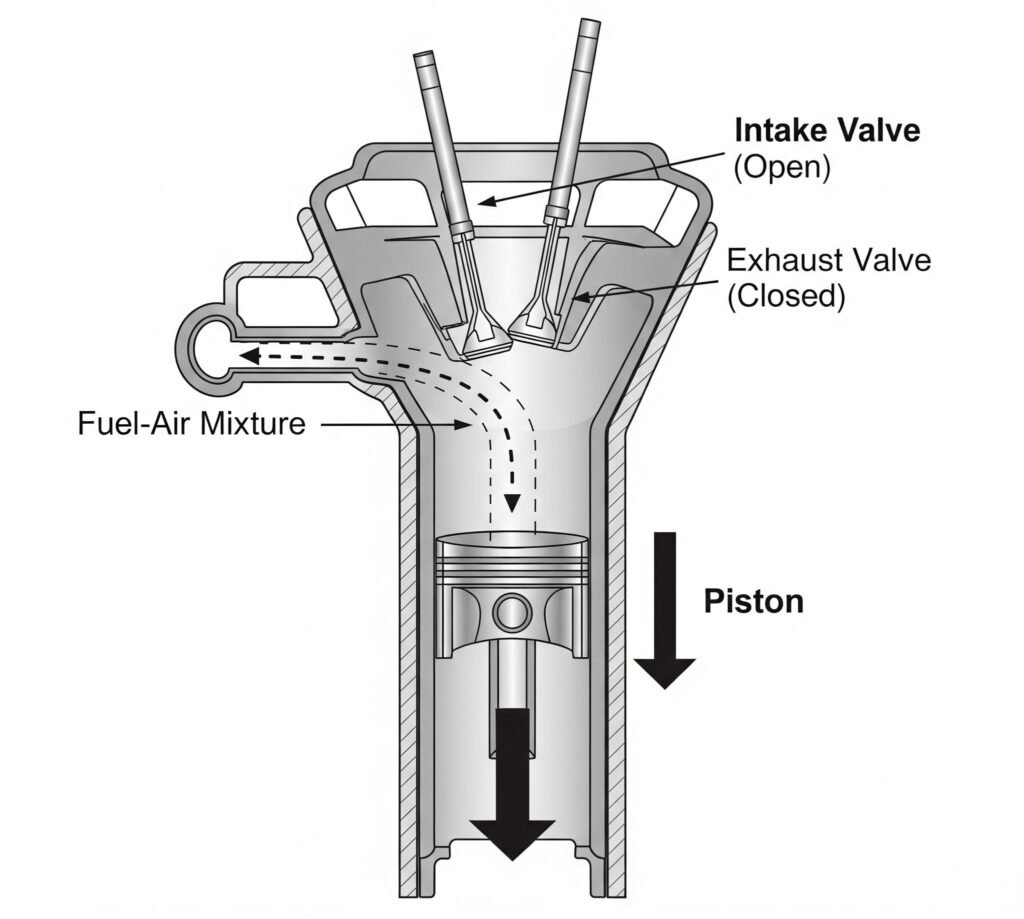
1. Intake Stroke
The piston moves down, and the intake valve opens. This creates a vacuum that pulls a mixture of fresh air and atomized fuel into the cylinder.
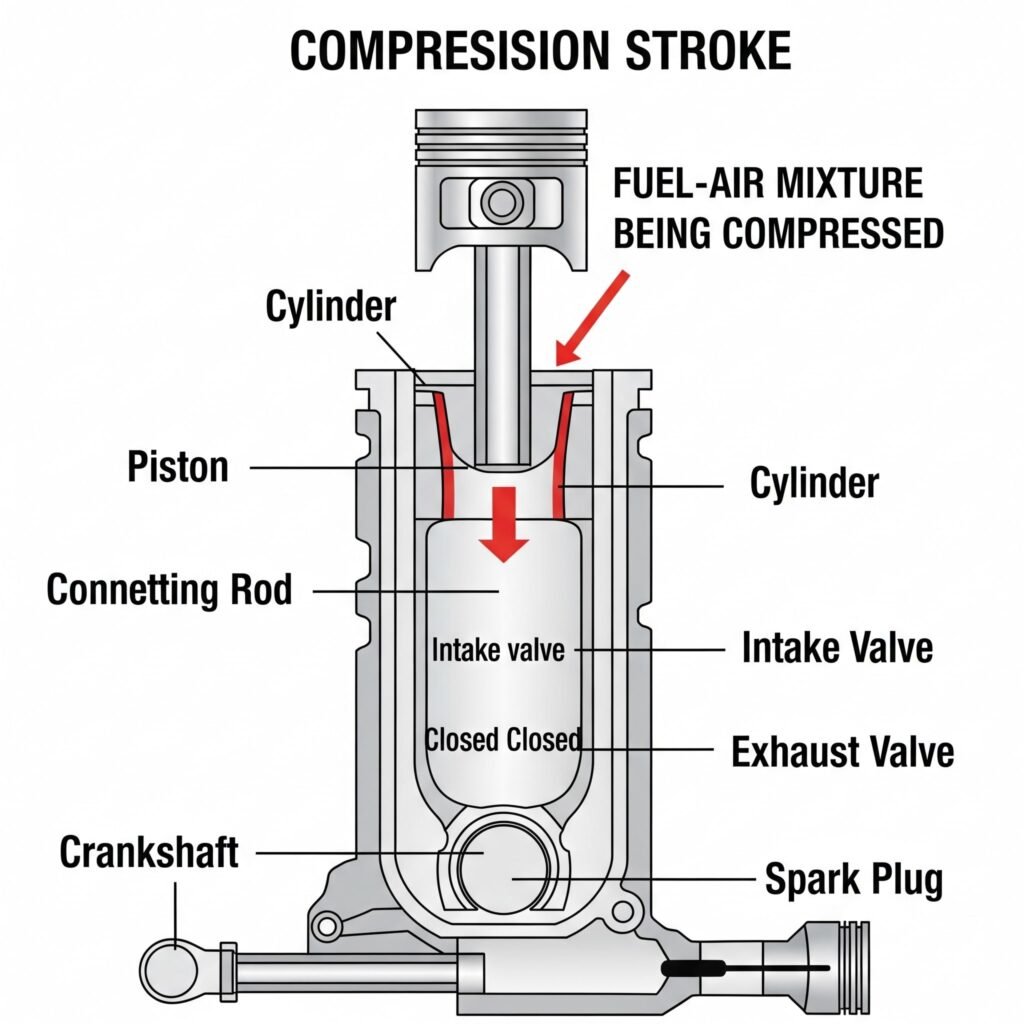
2. Compression Stroke
The intake valve closes, and the piston moves back up, compressing the fuel-air mixture into a tiny space at the top of the cylinder. This compression makes the mixture highly volatile and ready to explode.
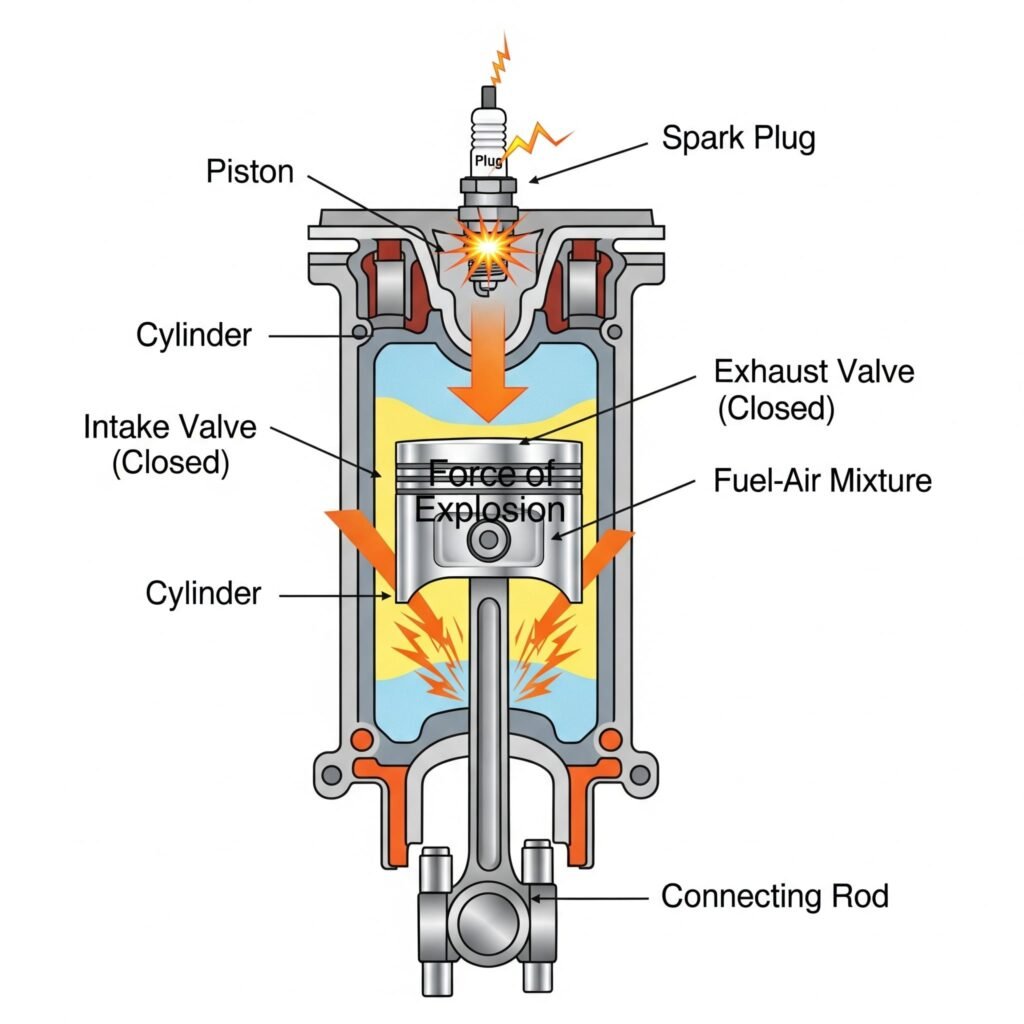
3. Power Stroke
At the precise moment the piston reaches the top of its travel, the spark plug fires a small electrical spark. This ignites the compressed fuel-air mixture, causing a rapid, powerful explosion. This explosion forces the piston down with great force. This is the only stroke that generates power.
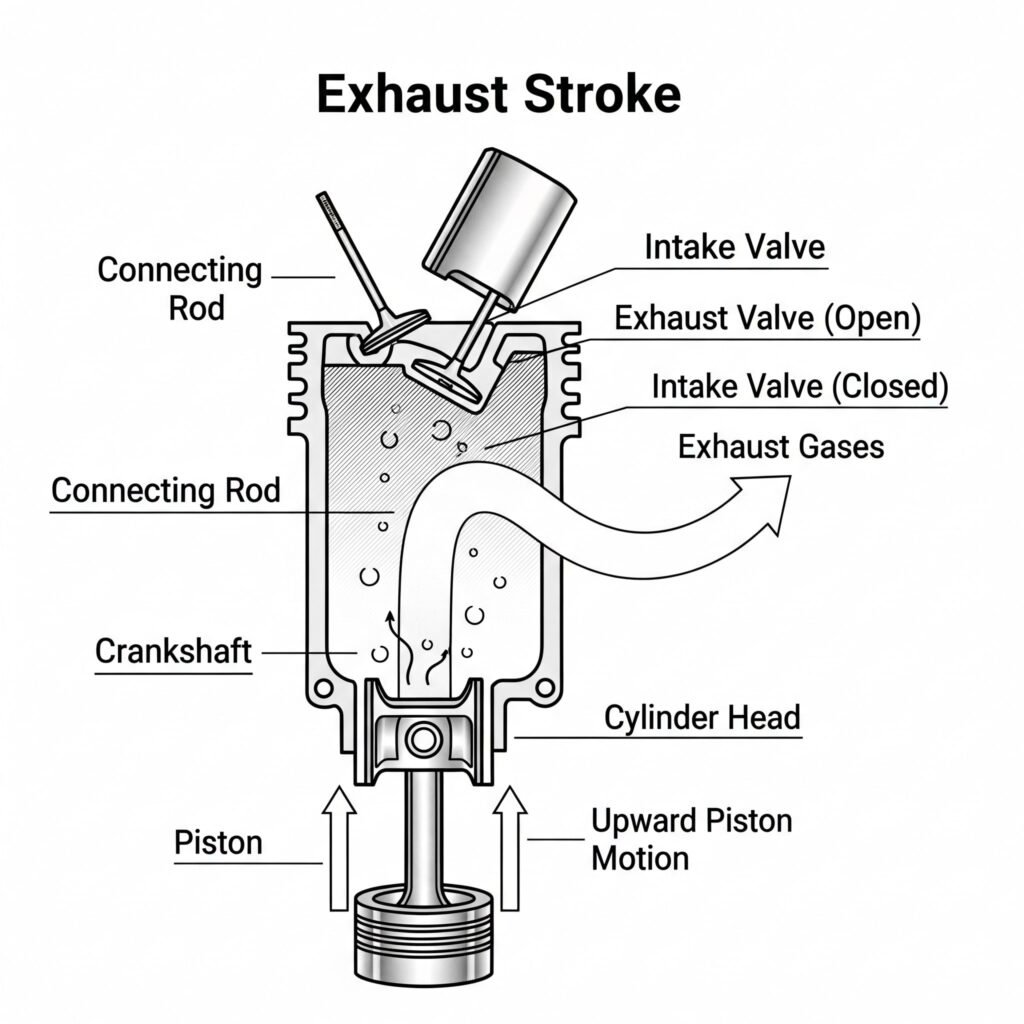
4. Exhaust Stroke
The piston moves back up, and the exhaust valve opens. This upward motion pushes the spent exhaust gases out of the cylinder and into the exhaust manifold, which leads to the exhaust pipe.
Once the exhaust gases are expelled, the cycle begins again with a new intake stroke.
The Role of Fuel, Air, and Spark
The entire cycle relies on a precise recipe:
- Fuel: Provides the chemical energy. It is atomized into a fine mist so it can mix with air and ignite quickly.
- Air: Provides the oxygen needed for combustion. Without oxygen, the fuel cannot burn.
- Spark: Provides the heat to ignite the mixture at exactly the right moment.
The timing of all these events, valves opening and closing, the spark plug firing, is controlled by the engine’s computer and mechanical components to ensure smooth, continuous power generation.
Conclusion
The internal combustion engine is a marvel of mechanical engineering. What sounds like a complex process is actually a repetitive and perfectly timed sequence of four simple steps working together to turn chemical potential into kinetic energy. The next time you hear your car’s engine roar, you’ll have a new appreciation for the miniature, controlled explosions happening thousands of times per minute to power your journey.