
Introduction
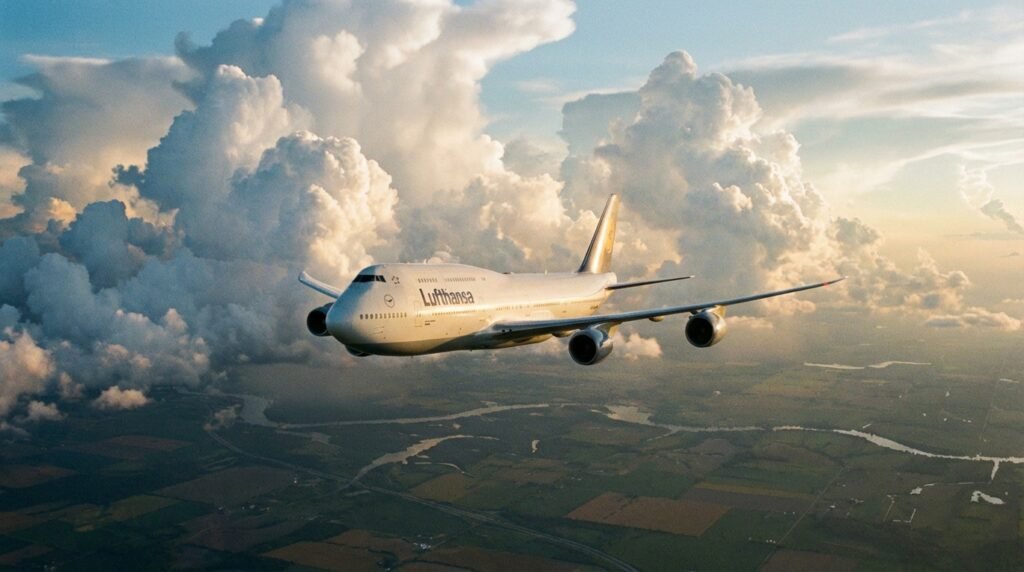
To witness a massive airplane lift effortlessly into the sky is to witness a profound marvel of science and engineering. It seems to defy all logic that such a heavy machine can overcome the pull of gravity, but its ability to do so is a result of a beautiful balance of forces and a precise understanding of physics. The secret to flight lies in the interplay of four fundamental forces: lift, weight, thrust, and drag. Let’s explore each of these forces and discover the scientific principles that turn an ordinary vehicle into a soaring wonder.
The Four Forces of Flight
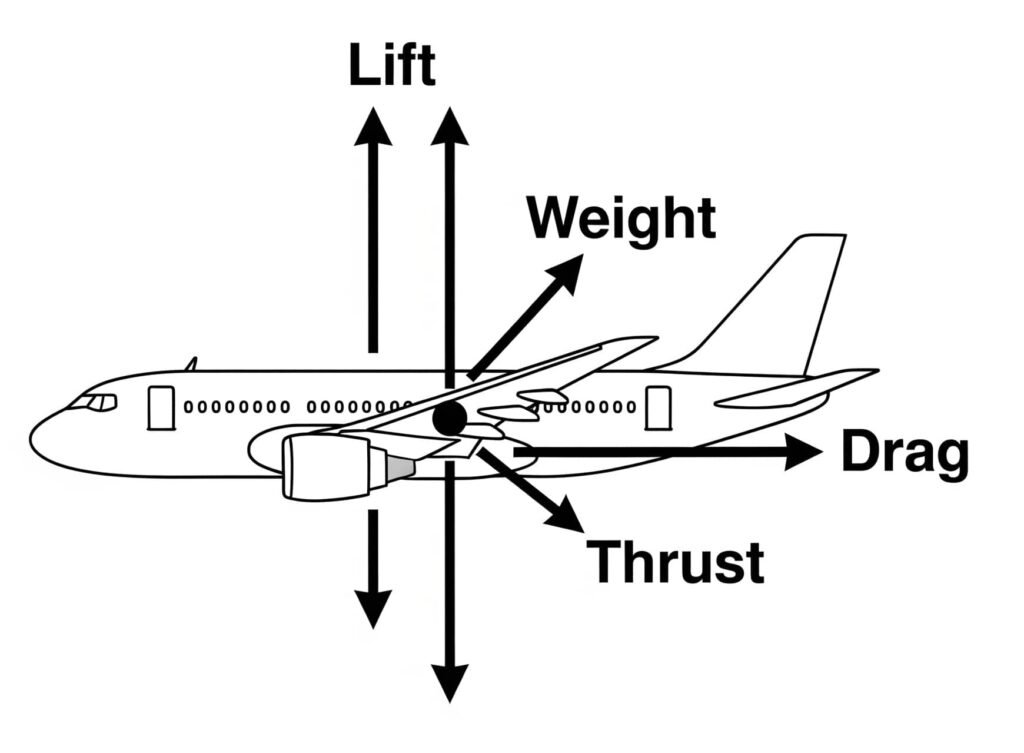
For an airplane to fly, four primary forces must be managed and balanced. Two forces act vertically and two act horizontally:
- Lift: The upward force that opposes gravity. It’s the force that allows an airplane to get off the ground and stay in the air.
- Weight: The downward force of gravity acting on the airplane. It is determined by the total mass of the plane, its cargo, and fuel.
- Thrust: The forward force generated by the engines that propels the airplane through the air.
- Drag: The rearward force caused by air resistance that opposes thrust and slows the airplane down.
For an airplane to maintain a constant altitude and speed, Lift must equal Weight and Thrust must equal Drag. To take off, Lift must be greater than Weight.
The Key to Flight: Lift and the Wing’s Shape
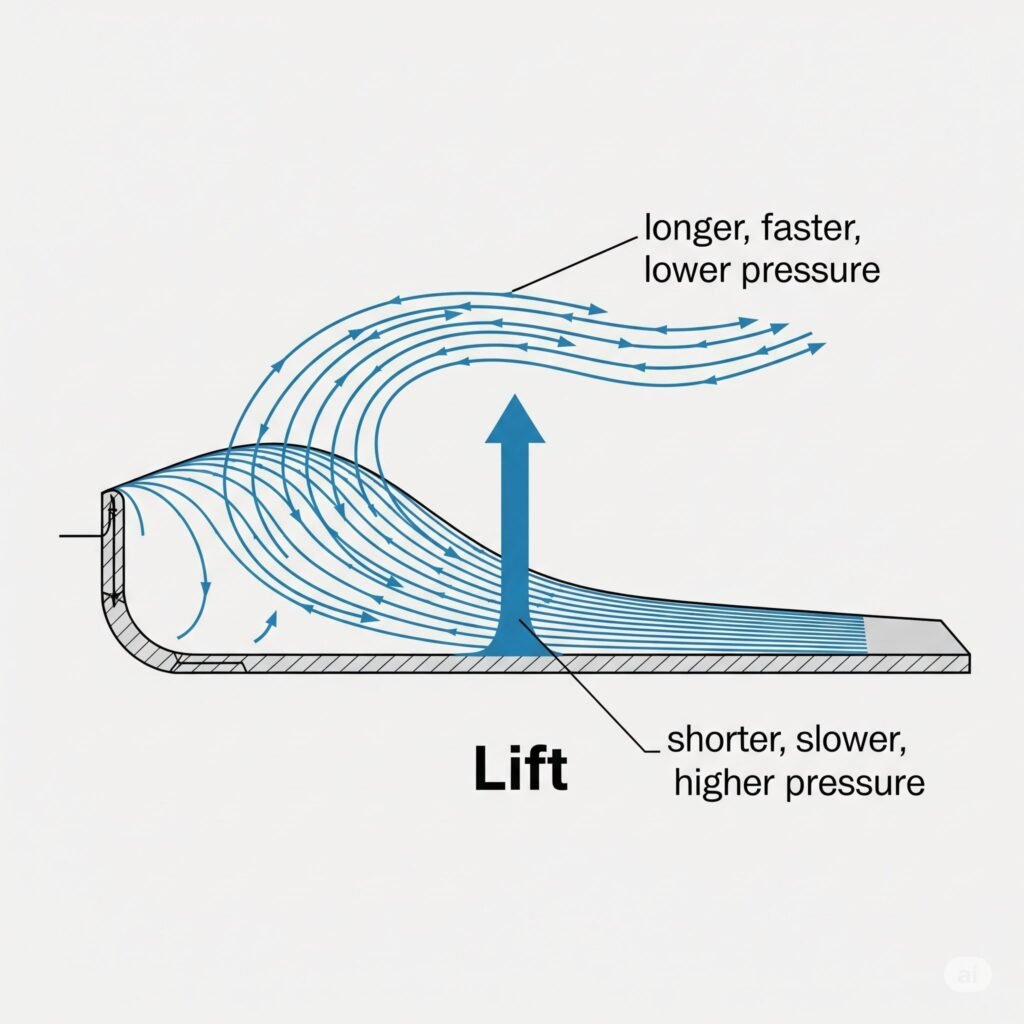
Lift is the most crucial force for flight, and it’s created primarily by the shape of the airplane’s wings, known as an airfoil. A wing is curved on top and flatter on the bottom. Here’s how this shape generates lift:
- Uneven Airflow: As the wing moves forward, air flowing over the curved top surface has to travel a longer distance than the air flowing along the flatter bottom surface.
- Pressure Difference: This difference in distance means the air on top moves faster than the air on the bottom. According to a principle in physics, faster-moving air has lower pressure.
- Lift is Created: The higher pressure of the slower-moving air underneath the wing pushes up on the lower-pressure air above, creating an upward force called lift.
The Balancing Act: How the Forces Work Together
On the runway, a plane’s engines generate thrust to overcome drag and get the plane moving. As the plane’s speed increases, the air moving over the wings generates more and more lift. When the lift force becomes greater than the plane’s weight, the airplane takes off.
Once in the air, the pilot constantly adjusts the engine thrust and the wings’ angle to keep the four forces in balance, ensuring a smooth, stable flight.
How a Pilot Controls the Plane
Pilots use various movable surfaces on the wings and tail to control the four forces and steer the aircraft:
- Ailerons: Located on the outer rear edge of the wings, ailerons move in opposite directions to make the plane roll or bank left or right.
- Rudder: Found on the vertical fin of the tail, the rudder moves left and right to control the plane’s yaw (turning the nose left or right).
- Elevator: Located on the horizontal part of the tail, the elevator moves up and down to control the plane’s pitch (pointing the nose up or down).
Conclusion
The ability of a machine to fly is not a mystery but a testament to the predictable and powerful forces of the natural world. By designing wings that generate lift, engines that create thrust, and control surfaces that manage these forces, human ingenuity, guided by the principles of physics, has made it possible to conquer the skies. It is a beautiful example of how understanding these scientific principles allows us to create technology that can achieve what was once considered impossible.