Introduction
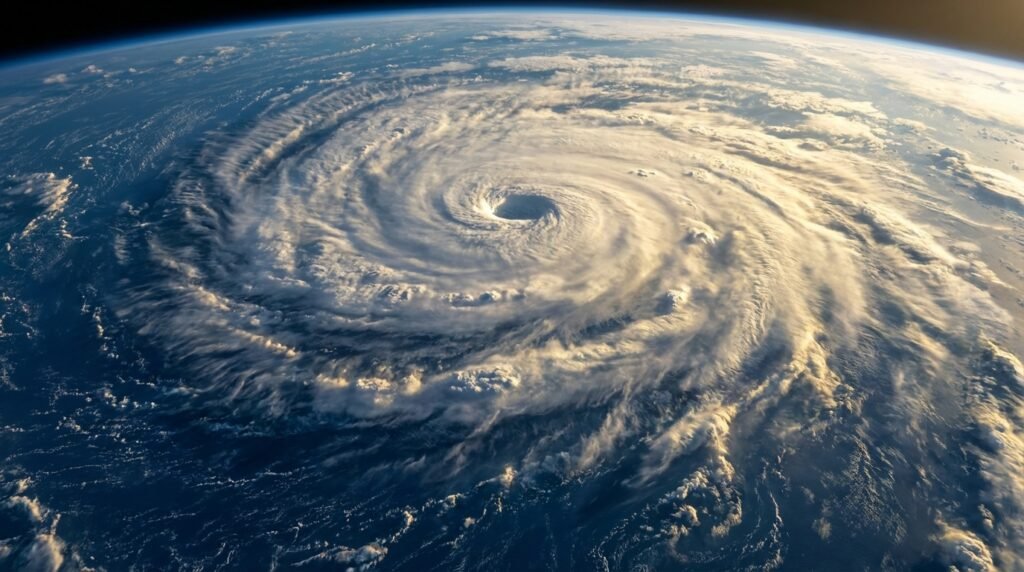
Hurricanes are among the most powerful and destructive natural forces on Earth. Known as typhoons or cyclones in different parts of the world, these massive storm systems can be hundreds of miles wide and pack winds of over 150 miles per hour. While they seem chaotic, a hurricane is actually a very organized “heat engine” that uses warm ocean water as its fuel.
The Ingredients for a Storm
A hurricane cannot just pop up anywhere; it requires a specific set of conditions to begin:
- Warm Water: The ocean surface temperature must be at least 26.5°C (80°F). This warm water provides the energy the storm needs.
- Moist Air: The air must be full of humidity so that clouds can form.
- Light Winds: There must be very little “wind shear” (changes in wind speed/direction at different heights). Strong winds can actually blow a developing storm apart.
The Birth of a Cyclone
The process starts when warm, moist air rises rapidly from the ocean surface. As this air rises, it leaves an area of low pressure near the water. Higher-pressure air from the surrounding areas rushes in to fill that space, gets warmed up, and rises too.
The Spin and the Eye
As the warm air continues to rise, it cools down and forms massive clouds. But because the Earth is spinning, the air doesn’t move in a straight line. A force called the Coriolis Effect causes the air to spiral.
- In the Northern Hemisphere, these storms spin counter-clockwise.
- In the Southern Hemisphere, they spin clockwise.
As the storm gets stronger and spins faster, an eye forms in the center. Paradoxically, the eye is the calmest part of the storm, with clear skies and very light winds, while the eyewall surrounding it contains the most violent winds and heaviest rain.
Landfall and Dissipation
A hurricane stays strong as long as it is over warm water. However, once it moves over land or cooler water, it loses its fuel source. Friction with the ground and the lack of warm moisture cause the storm to weaken and eventually dissipate, though it can still drop massive amounts of rain far inland.
Conclusion
A hurricane is nature’s way of moving heat from the warm tropics toward the cooler poles. By understanding the science of pressure, temperature, and the Earth’s rotation, we can better predict these massive storms and protect the communities in their path.