Introduction
We often take our refrigerators for granted, but they are actually engineering marvels. It might seem like a fridge “creates” cold, but in the world of physics, cold isn’t something you create, it’s simply the absence of heat. A refrigerator is actually a “heat pump” that spends its day grabbing heat from inside the box and throwing it out into your kitchen.
The Magic of Evaporation
To move heat, a refrigerator uses a special liquid called a refrigerant. This liquid has a very low boiling point. You know how when you put rubbing alcohol on your skin, it feels cold. That’s because the liquid is evaporating (turning into gas) and taking heat away from your skin to do it. Your fridge uses this exact principle on a much larger scale.
The Four Key Components
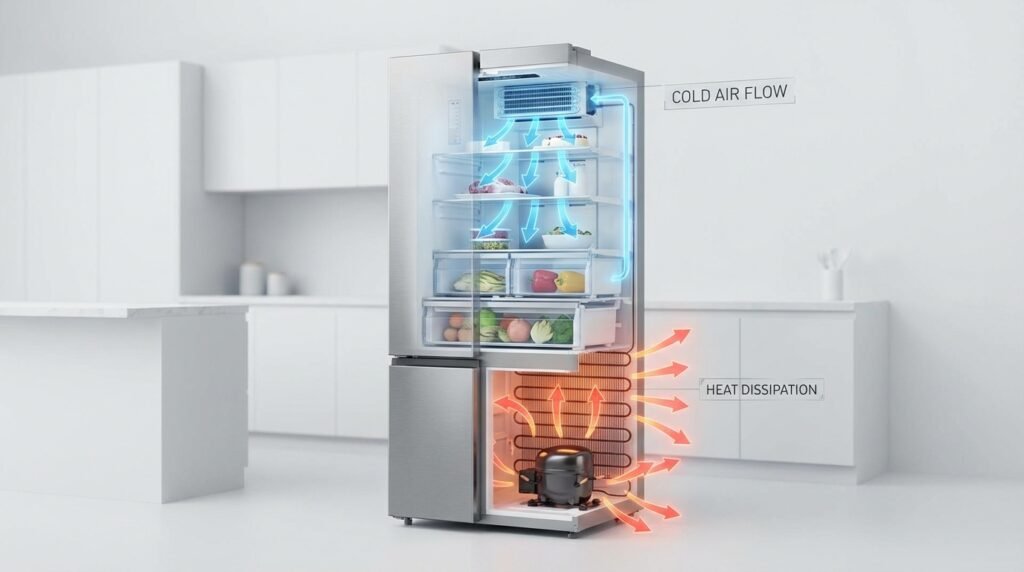
- The Evaporator (Inside the fridge): The cold refrigerant liquid flows through coils inside the fridge. As it absorbs heat from your food, it turns into a gas.
- The Compressor (The heart): This is the loud humming part at the bottom. It squeezes the gas, which makes it very hot and high-pressure.
- The Condenser (Outside the fridge): The hot gas flows through the coils at the back or bottom of the fridge. As the heat escapes into your kitchen air, the gas cools back down into a liquid.
- The Expansion Valve: This tiny opening lets the high-pressure liquid spray into the evaporator coils, where it drops in pressure and becomes freezing cold again, starting the cycle over.
Why is the Back of the Fridge Warm?
If you’ve ever felt the back of your refrigerator, you’ll notice it’s warm. That is literally the heat that used to be inside your milk and leftovers. The fridge isn’t “making” cold; it’s just acting as a conveyor belt, carrying heat from the inside to the outside.
Conclusion
The next time you grab a cold drink, remember that your refrigerator is a master of thermodynamics. By constantly evaporating and condensing a refrigerant, it maintains a safe environment for our food, proving that sometimes the best way to stay cool is simply to let go of the heat.