Introduction
Imagine a machine that runs 24 hours a day, 7 days a week, for decades, without ever taking a break. That is your heart. This muscular organ, roughly the size of your two hands clasped together, is the engine of your circulatory system. Its sole job is to keep blood moving so that every cell in your body receives the oxygen and nutrients it needs to survive.
The Four-Chamber System
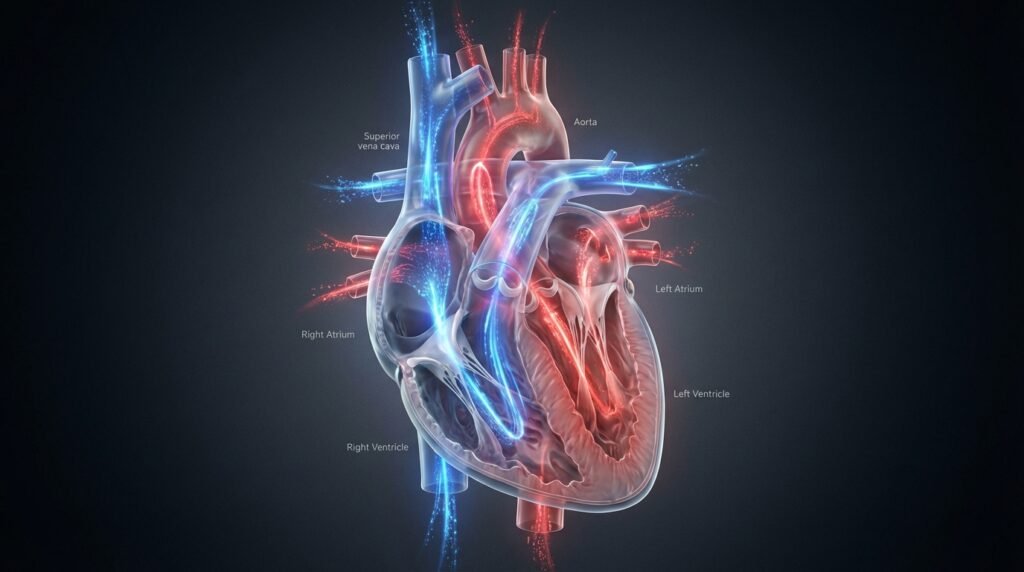
The heart is divided into two sides (left and right) and four chambers. Think of it as a house with two floors:
- The Atria (Top Floor): These are the receiving rooms. They catch the blood as it returns to the heart.
- The Ventricles (Bottom Floor): These are the powerhouse pumping rooms. They have thick, muscular walls to push blood out into the body.
The Two Loops of Circulation
The heart actually handles two different “shipping routes” at the same time:
- The Pulmonary Loop (To the Lungs): The right side of the heart receives “used” blood that is low in oxygen. It pumps this blood to the lungs, where it drops off carbon dioxide and picks up a fresh supply of oxygen.
- The Systemic Loop (To the Body): The oxygen-rich blood returns to the left side of the heart. This side is much stronger because it has to pump that blood everywhere, from the top of your brain to the tips of your toes.
The “Beat” and the Valves
That “lub-dub” sound you hear through a stethoscope is the sound of your heart valves closing. Valves act like one-way doors, ensuring that blood only flows in one direction. When the heart contracts (the “lub”), the blood is pushed forward; when it relaxes to refill (the “dub”), the valves snap shut to prevent the blood from flowing backward.
The Electrical Spark
Your heart doesn’t wait for your brain to tell it to beat. It has its own built-in electrical system called the Sinoatrial (SA) node. This natural pacemaker sends a tiny electrical signal through the heart muscle, telling the chambers exactly when to squeeze in a perfect, rhythmic sequence.
Conclusion
The human heart is a masterpiece of biological engineering. By combining mechanical pumping, one-way valves, and electrical timing, it ensures that life-sustaining blood never stops moving. Taking care of your heart through exercise and a healthy diet is the best way to keep this incredible engine running smoothly for a lifetime.